
Dear Ones,
Today we visited two iconic sites in Kyoto — Fushimi Inari Taisha with the thousands of bright orange torii gates snaking up and down the hillside, and the powerfully understated rock garden at Ryōan-ji. Very different places, each with its own potency and challenges.
These first two images are from the entrance to Mount Inari and I have placed them here just to show you how many people visit this site. It is packed. Sometimes it is even hard to move forward, a human traffic jam walking through a true wonder. The full circuit is around 2.5 miles and takes two to three hours at a normal pace. We had all morning. There is a stopping place midway along the trail with a great view of Kyoto below. Most people stop here, enjoy the view and go back. We did the whole thing which was quite a workout. You go up, up, up seemingly forever, heart beating and breathing heavily. And then you come down, down, down with increasingly aching knees, pounding away on the stone steps.
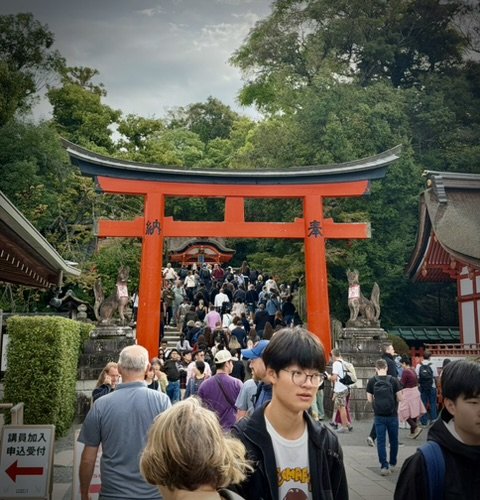
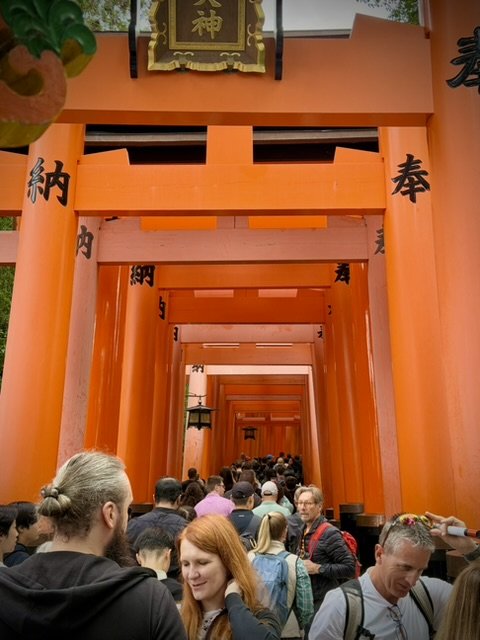
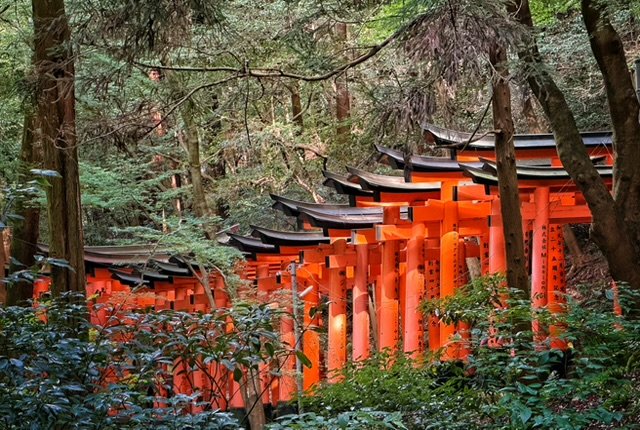
The experience reminds us that walking is a practice, and the unending gates remind us that repetition is an important part of practice. Ten thousand gates is not ten thousand different things. It is one thing, ten thousand times, and after a while the counting stops, and you just continue. Just like sitting and walking practice in the zendo.
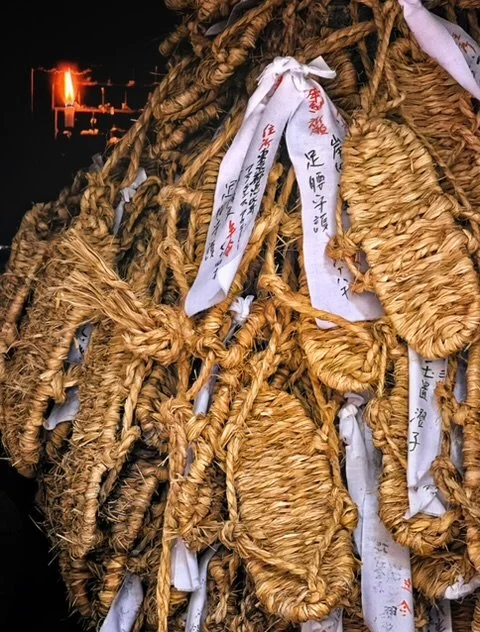
Sandals of former pilgrims walking the mountain.
There are also thousands of private altars along the way tended by families. The kitsune, or foxes, are the spirit guides of the mountain and you see stone images everywhere. In other places, all over Japan, you see Jizo bodhisattva statues with their caps and bibs. Here you see foxes and each holds something in its mouth or under its paw. They vary and have meaning. They are not decorative.
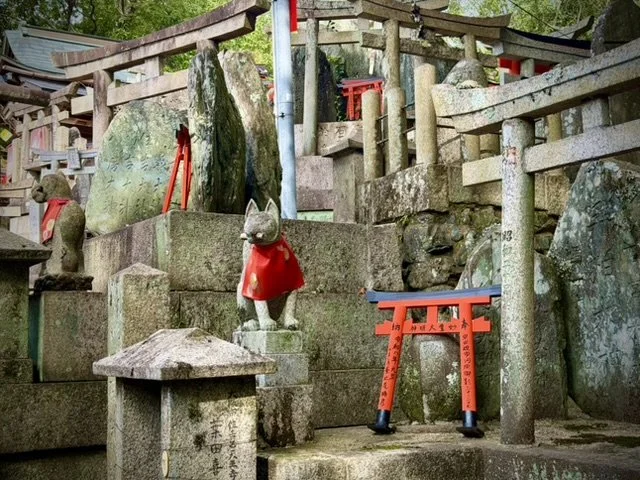
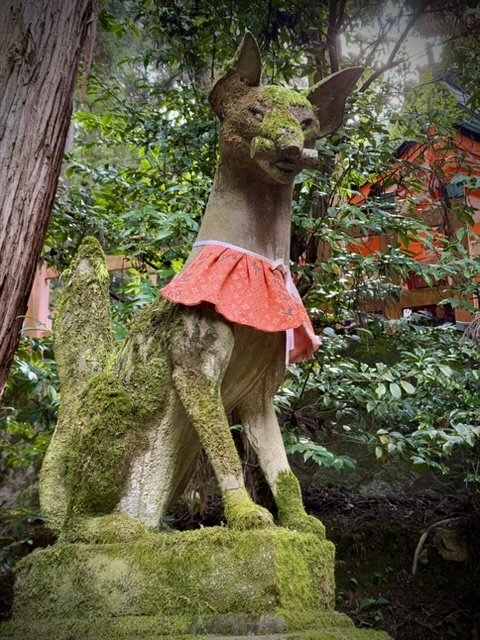
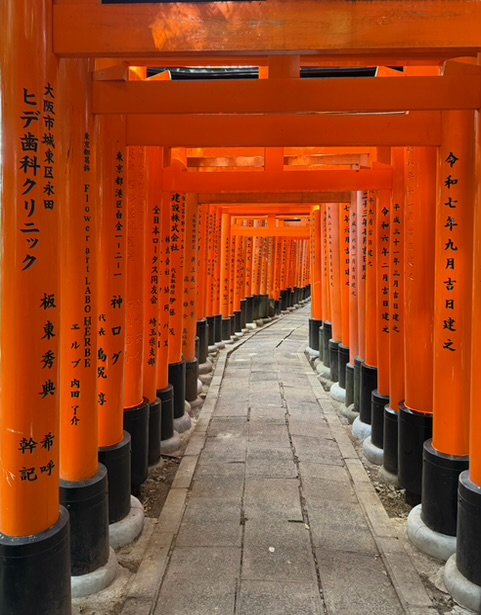
Every one of the gates (Senbon Torii) was donated by an individual or a business, and the donor’s name and the date are painted in black on the back of each post. Walking up you see the vermillion color. Walking down you see a wall of names: companies, families, sake breweries, some from a hundred years ago and some from last spring. The mountain is made up of gratitude and hope, itemized.
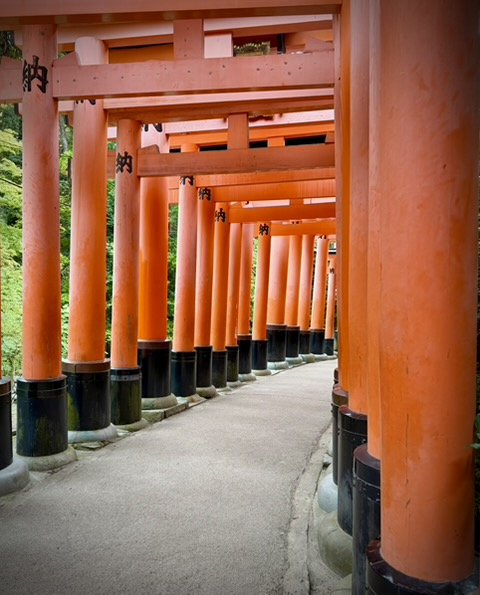
Going up…
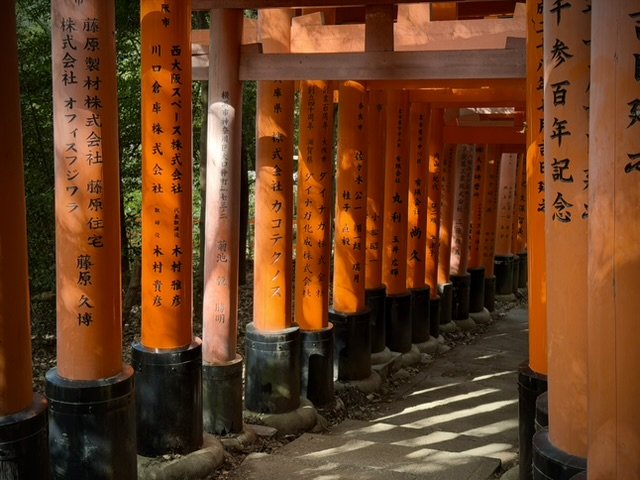
Coming down…
After a shared lunch in the neighborhood just outside of the main gate, we traveled back to the hotel. Some folks chose to rest after what was a challenging morning physically, and others of us decided to go on to Ryōan-ji for the remainder of the afternoon. It is one of the most famous gardens in the world, and as a result, one of the hardest to see. I was there on my first visit in the late 1990s and I was eager to return. The grounds of the temple are extraordinary even though the main attraction is the rock garden. There is a lake, a bridge, mesmerizing paths, rocks and trees, moss and stones.
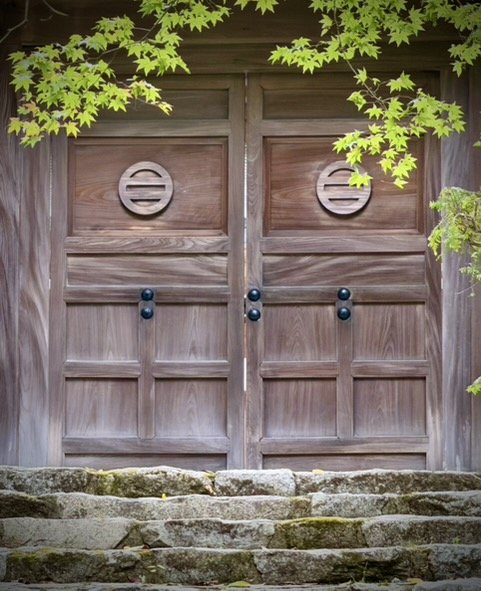
There are lovely gates inviting you in.
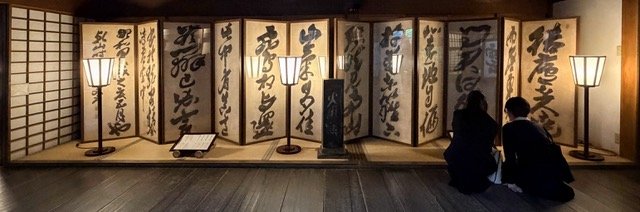
School girls were examining this ancient calligraphy screen as we entered the temple building which is the entrance to the rock garden.
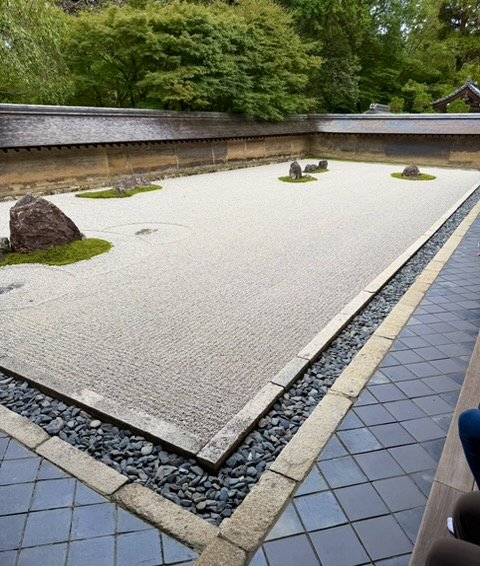
You can see images of the rock garden itself online and in many places. Here are a few views from the gaitan (wood walkway around the temple, above the garden). The prime spot, if you can get it, is to sit on the edge of the gaitan, letting your feet dangle, and essentially sit zazen. People are milling about and are not totally silent, but it is amazing how much people slow down and quiet down once they enter the space. It stops you. Here are a few simple shots of the famous views.
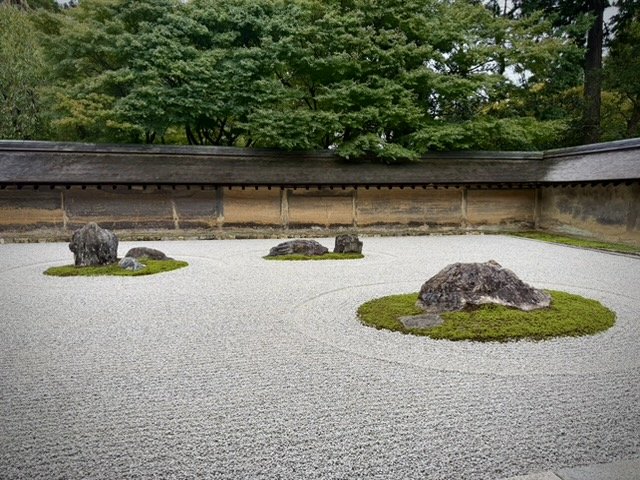
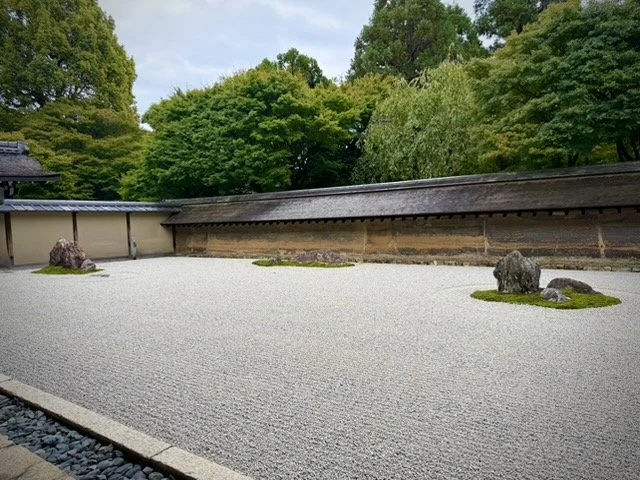
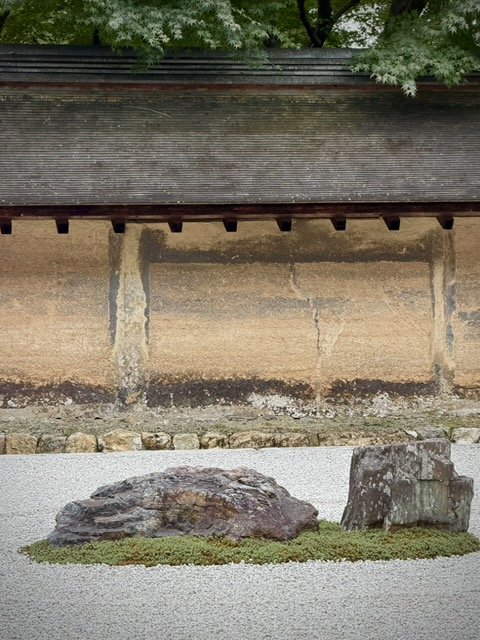
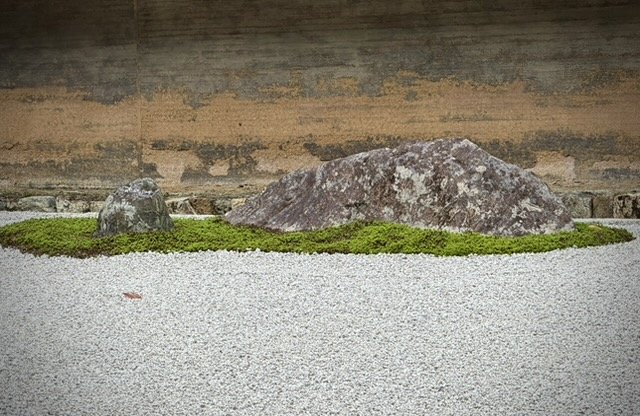
Notice the one leaf in the gravel.
You can see a few knees showing along the gaitan in this one. An important and famous fact that underscores our practice: There are fifteen stones in the garden. From any one position you can only see fourteen. There is no place from which you can see them all. There are many interpretations that have been given over the centuries, but this is the one that Roshi Joan gave which takes us right into the heart of our practice. The garden is not withholding a secret and this is not a trick. It is a small, beautiful demonstration that a complete view is not available from a position, and we are always taking a position. Sit on the edge with that teaching.
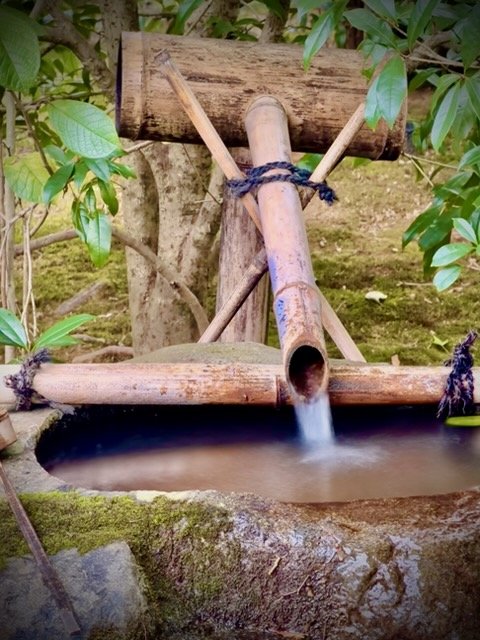
Past the rock gardens there are many beautiful details along the paths.
I happened to be on the trail surrounding the lake when I looked up to see Roshi Joan and some others from our group standing on the stone bridge going out to a small island. There were many branches in the way, but I managed something.
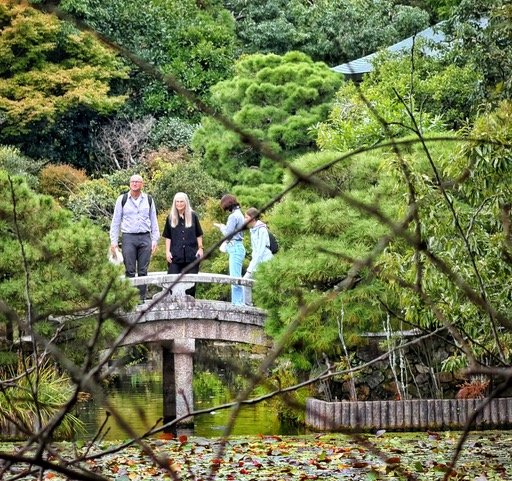
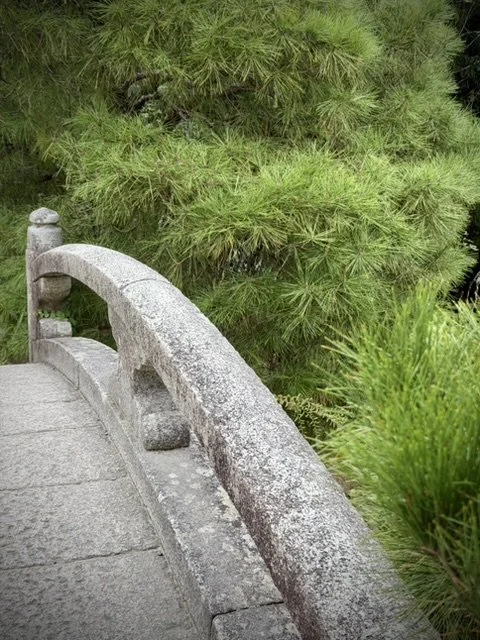
The bridge itself is lovely and invites stopping and looking out over the foliage and the water.
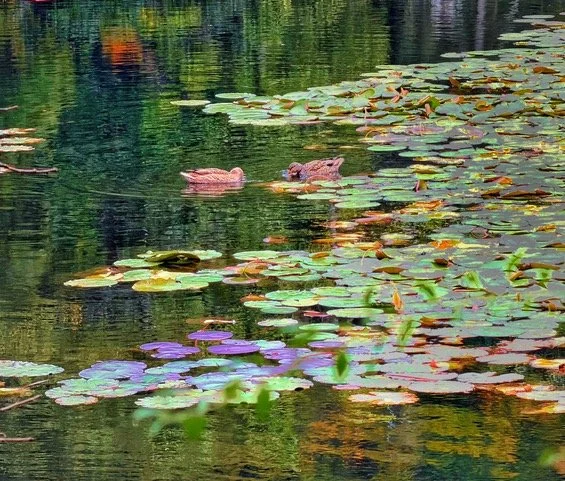
And finally, an homage to DeWitt Jones, my photographer friend who has done amazing impressionistic photographs as an homage to Monet in his gardens in France. Here is mine from Ryōan-ji.
Tomorrow is Nara, and another of Japan's great Buddha statues.
Much love,
Flint