Dear Ones,
As I finish packing and preparing to travel back home, I wanted to add just a few final thoughts and reflections. The arc of this pilgrimage was artfully crafted and beautifully curated beyond my expectations. We began with the busyness that is Tokyo but almost immediately plunged into the world of ancient Japan at Sensō-ji temple. Remember the small golden statue of Kannon that was discovered by fishermen and enshrined at Sensō-ji in the 7th Century? That statue was hidden from public view and has not been openly displayed nor seen by the monks tending the temple for all of these centuries. It is cherished and protected, just like the golden seed of compassion in each of our hearts, the life-light of goodness. This seed is what we cherish and care for with our practices and through our relationships with each other. Then yesterday, on our final day, we met the necessary counterpoint. We entered a space in which 1001 life-size statues of Kannon stood upright, facing us at Sanjūsangen-dō. I was overwhelmed by the power of these images and the force of goodness turned toward the world. We were reminded of the deep seed of mercy and kindness as exemplified by the small Kannon brought up from the sea so long ago. Then our commitment and vows were reflected back to us by the many upright Kannons waiting for us to join them. We do our best to respond to the suffering of the world despite our limitations and fears. We are never perfect, but we can be wholehearted. These two powerful images marked the beginning and the end of our journey. They are, in some ways, the essential through-line of the entire pilgrimage.
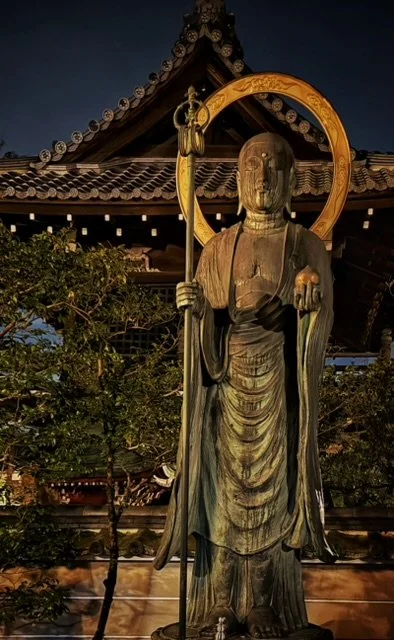
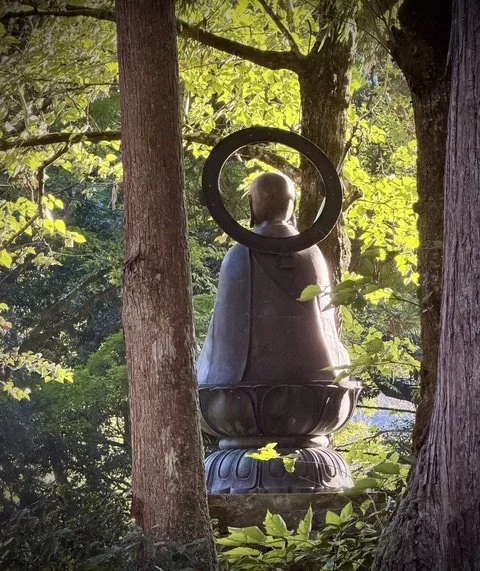
Kannon, standing even in the dark
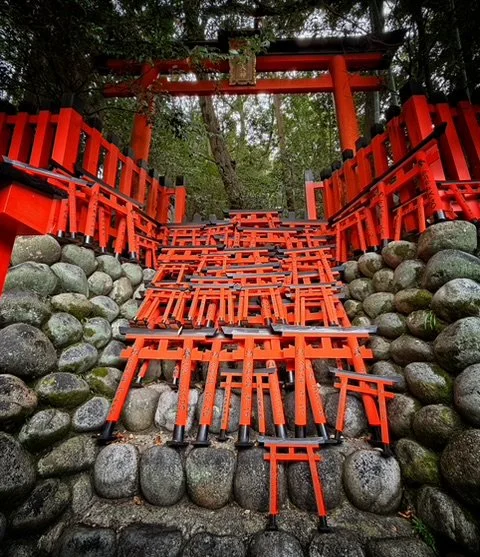
When we walked through the many vermillion torii gates later in the pilgrimage we were enacting the reality of a life of practice — that we are always meeting a threshold and we are challenged to continually step through. As we do, paying careful attention helps. Sometimes with considerable effort we ascend up through the gates of awakening in order to better serve the world in need. At other times we descend into the dark places that require our care. As we go along our compassion practices shore up our courage to continue to do so, gate after endless dharma gate.
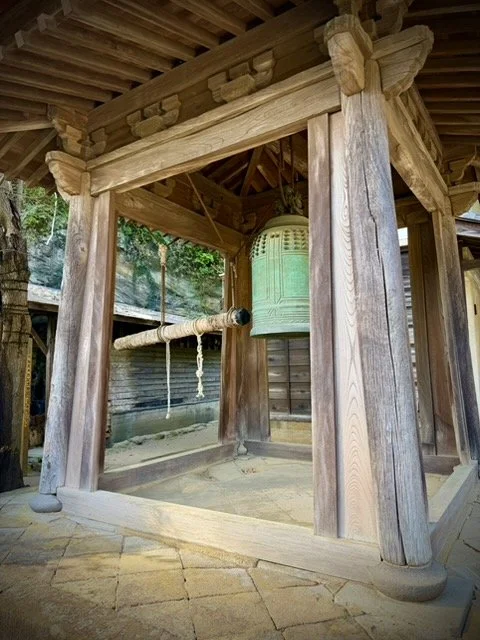
Each of the large Buddhas — at Kamakura and Nara — reminded us of the boundlessness of our own nature as buddhas in the world. The many huge bells both call us to practice and, at the same time, send out a call into the world, announcing that we are here, willing and available. The overpowering beauty of the many gardens and temples reminds us of all that humans are actually capable of, even in a world that can seem cruel and dark at times. So much of what we witnessed each day had either survived or was rebuilt after terrible wars. Many had been resurrected after the inevitable fires that have destroyed so many of the ancient wooden structures. This spirit of restoration is the embodiment of vow; we return again and again; we continue, knowing that things are impermanent; we remain committed to care in a world that does not always return our kindness. As Louise Glück wrote in her poem, From the Japanese: “Why love what you will lose?/Because there is nothing else to love.”
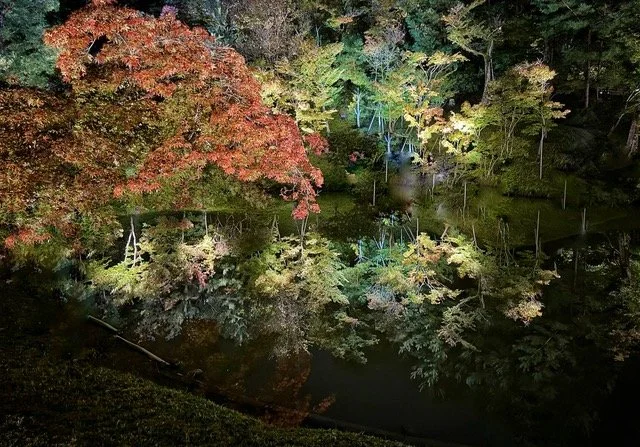
Pond reflections in the garden at night
And in the middle there was Eihei-ji, a pivot point in the pilgrimage. We returned to the source of our lineage, the place where Dogen laid down its roots in the 13th century, and where it is still held in its most elegant and powerful form, even as we shape and shade it into new expressions in the modern world. To actually be there and sit in the zendo together, to walk the hallways and endless stairways where centuries of monks have walked, to enter the Buddha Hall with hundreds of training monks and teachers, and to offer incense and bow to our ancestors in that place, was an immense privilege and a great grace. I will carry it in my body and in my robes for the rest of my life.
This pilgrimage came with a name which appears on the front cover of a 60-page document we were given as we first stepped onto the path. The title is: "The Japan Pilgrimage: The Living Way of Zen, Joy, and Beauty." These last two weeks have certainly reflected all that is named in that title — and more. I also want to clearly acknowledge that I drew generously from this document in crafting my daily posts. This was the source of much of the history and the teachings that I offered along with my own reflections and daily photographs. I thank everyone who participated in creating this very detailed document and for curating an amazing pilgrimage experience. I especially want to thank Roshi Joan Halifax, for inviting me to participate and for her teachings every day. Having led a pilgrimage to Japan with Kaz for so many years, they each contributed to our pilgrimage companion document and the lived experience each day. I am particularly grateful to Kimiko Bokura who was our logistics leader, translator, and "ox herder." As Americans we joked that we were like a small herd of buffalo in the refined world of ancient Japanese temples. None of this could have happened without her. Our young and energetic supporter, Jen, also provided translation and kind direction. He was also Kaz's attendant. We witnessed a beautiful daily ballet between our oldest and youngest members.
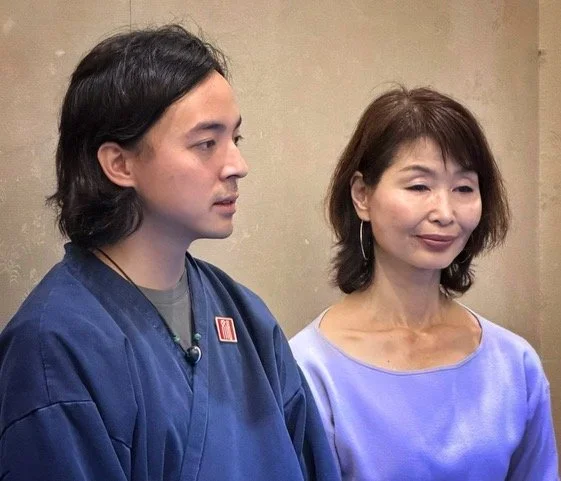
Jen and Kimiko
I arrived in Japan with a lingering memory of my practice period here almost 30 years ago. I was carrying the memory of my teachers on that trip who have now died, and who so generously accompanied me on that pilgrimage. I brought Erin with me on this trip as well, tucked into the broken part of my heart where he always resides, like the small golden Kannon at Sensō-ji, cherished and protected. I offered him a view of the joy and beauty he would have loved, using my eyes. I also fell in love with every wonderful person in our group and I now have new friends and the unexpected gifts that I could not have anticipated.
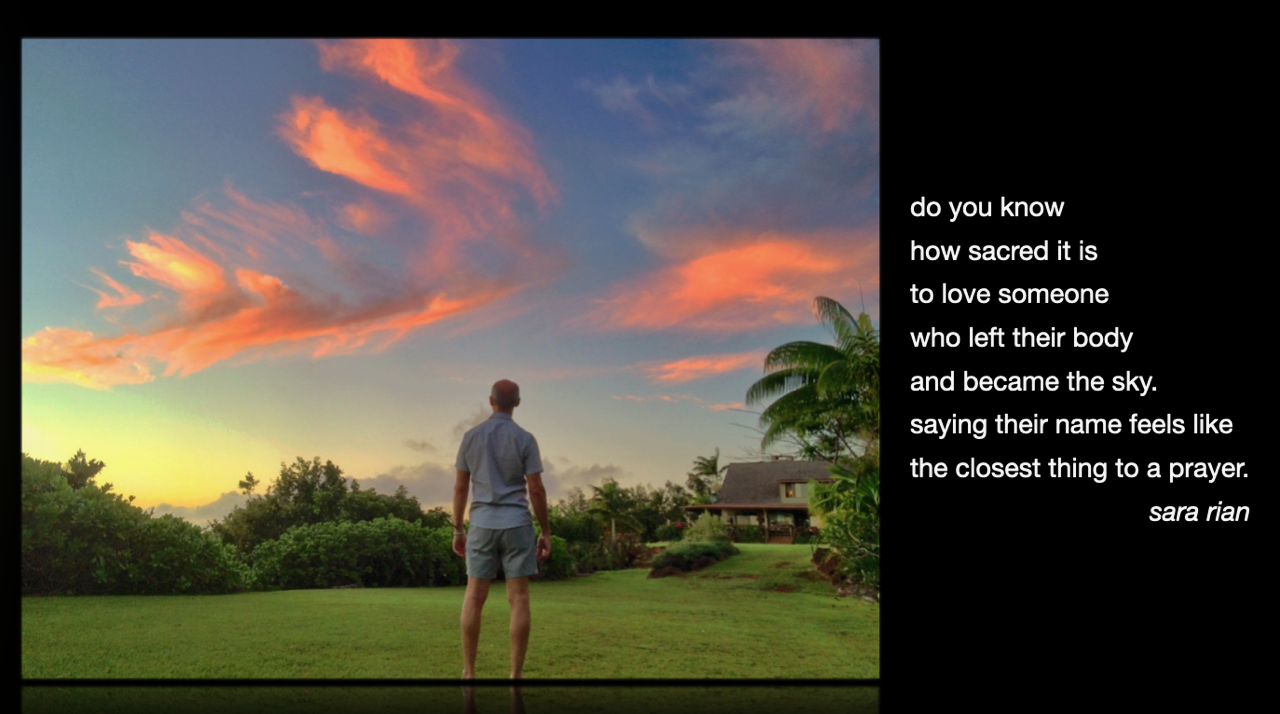
Erin in Hawaii
There is so much more I could say but I have written enough. Now it is time to return and integrate this amazing experience. If we are fortunate, this is what a pilgrimage does — it transforms the pilgrim. This is no ordinary transformation, but comes as the embodied inconceivable. There is no way to hold it all in my mind or understand what happened in a conventional way, but I can continue to live it out to the extent that I have absorbed and integrated the experience — embodied and yet inconceivable.
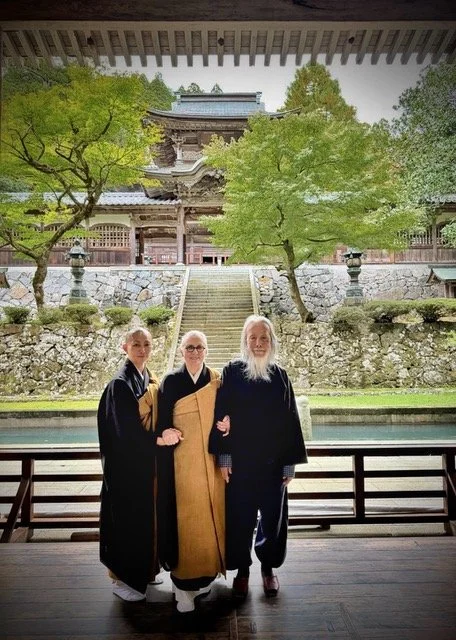
At Eihei-ji: Kaz Tanahashi, Roshi Joan Halifax and Wendy Dainen Lau, our senior teachers
So I bow and step back. It is time to walk on.
With love,
Flint