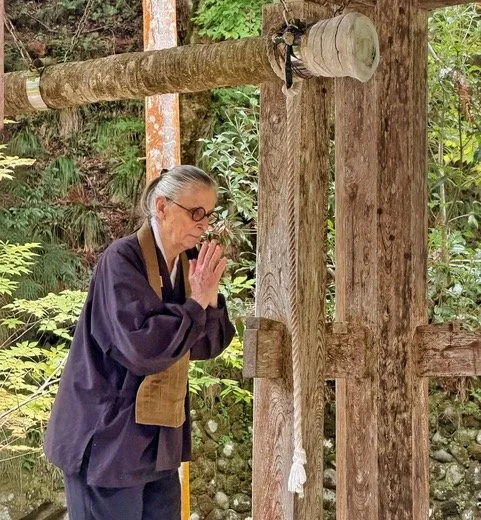
Dear Ones,
You may have noticed that there was no message from October 18 or 19. We were at Eihei-ji, following the schedule as guest monks, with no internet, limited phone service, and no time. It was a great honor to be there again after my last visit with Blanche Hartman and Mel Weitzman, led by Hoitsu Suzuki (Suzuki Roshi’s son, who is now Vice Abbot at Eihei-ji). This is home to our Soto lineage. Today we have been in Kanazawa, and I am trying to catch up. It is the halfway point, with Dogen being the inflection point in the middle.
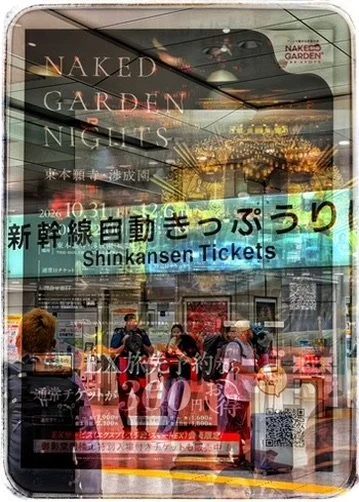
Getting there from Kamakura was a “trip,” literally and figuratively. We took a bus from Kamakura back to the main train station in Tokyo. Those of you who regularly deal with massive train stations (New York, London…) are more familiar with this kind of situation, but it is always a bit overwhelming to me. We rode the Shinkansen, the bullet train, from Tokyo to Fukui Station. I did post a quick impressionistic image from Tokyo Station. This is how it felt to me.
The line we were on ran north through Nagano and the mountains (the Tateyama Range), then down to the Sea of Japan, and finally along the coast through Kanazawa (where I am now trying to finish up on Tuesday afternoon) into Fukui. We boarded yet another bus from Fukui Station to Eihei-ji.
Eihei-ji (Temple of Eternal Peace) was founded by Dogen in 1244. He had returned from China in 1227 and lived and taught near Kyoto. With an invitation from a local lord and pressure from the Tendai establishment, he moved everything to the mountains and spent the last decade of his life there. He was 43 when he came to this mountain site, and he lived to be only 53. He wrote most of the Shobogenzo while living there, but he died in Kyoto in 1253 while being treated for his illness.
There is much to learn about Dogen and the Soto school, so I will not attempt to offer anything comprehensive. Kaz Tanahashi, who is with us and who has translated the entire Shobogenzo, has spent more of his life translating Dogen than anyone currently alive. It is because of him that a great many English speakers have any access to Dogen at all. Roshi wrote to us: “You are walking into the building where these words were written, with the one person who carried them into your language. Whatever else happens on this trip, this is the center of it.”
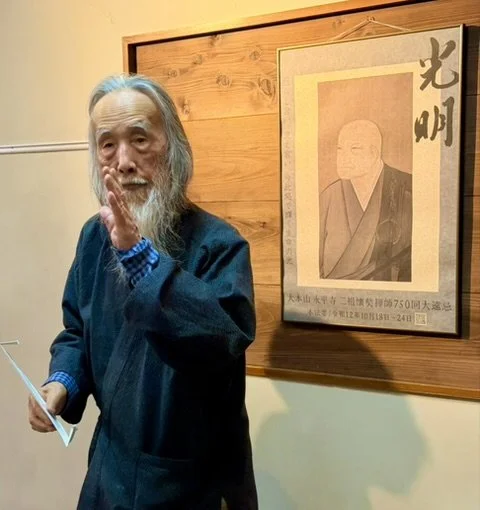
I found Kaz contemplating a poster with Dogen’s portrait while he was waiting for everyone to arrive for the next activity. He then turned to offer instruction for what was next. Kaz is 93 and still going strong.
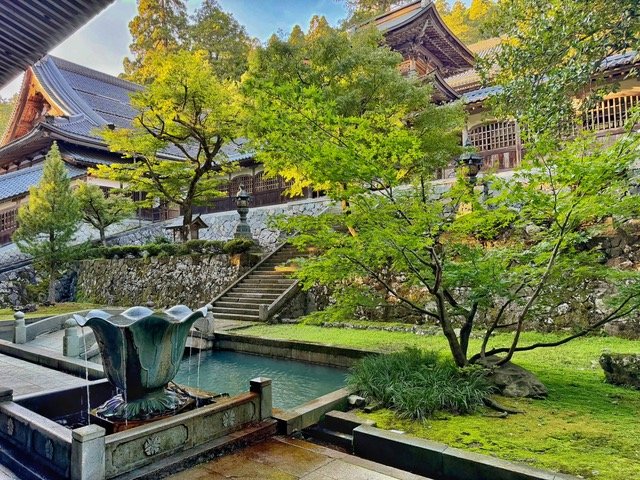
Because the monastery has been built into the hillside for seven centuries, seemingly endless stairways connect the buildings, built in the most beautiful ways.
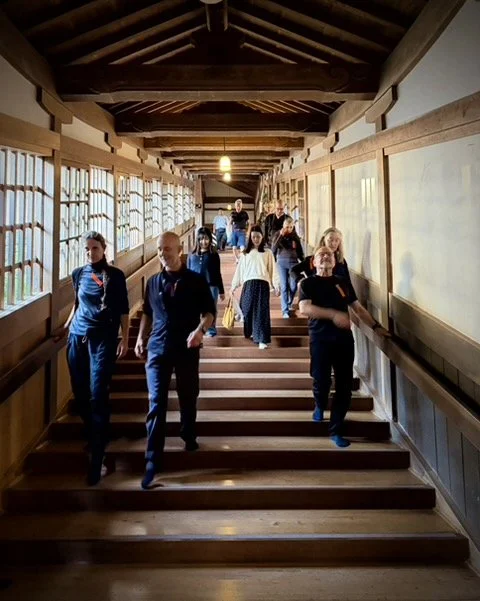
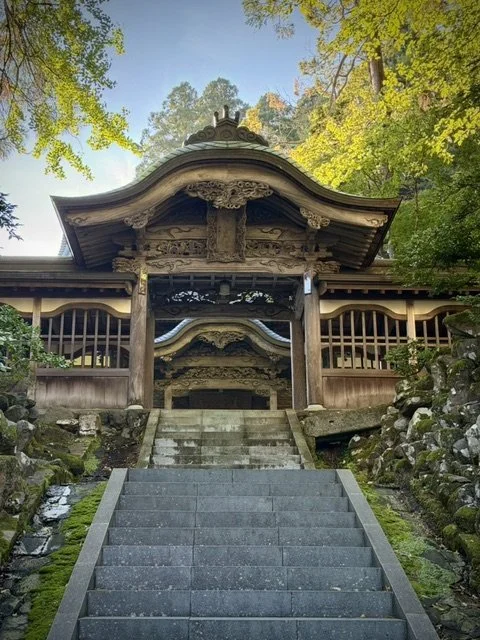
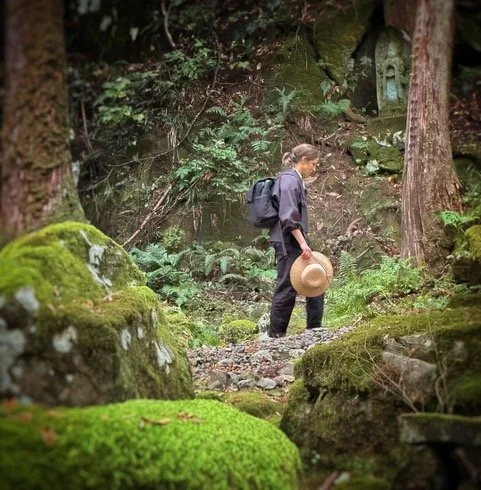
One of the important things to remember is that we are on pilgrimage, sensing deeply what it is like to enter these places and meet these people along the way. Here is one of our group walking in the forest on the Eihei-ji grounds, looking a lot like the pilgrims of old.
Having arrived, we slept dormitory-style on the floor of a tatami room, with a futon and pillow. The men were in one room together and the women in another. We set our alarms for 4:30 AM for morning zazen, followed by the full Eihei-ji service in the Buddha Hall. Photographs weren’t allowed in that space at that time, but I can say that it was a profound experience.
As a transmitted priest, I was ushered onto the “inner” tatamis in the Buddha Hall during the elaborate, formal service, along with Roshi Joan, Dainen, and three other priests in our group. We were sitting (kneeling, really, for most of an hour-long service, only getting up now and then to do full bows) with the other older priests in brown and gold robes. There were around 150 monks in training, and the many officials and teachers all surrounded us. It was an experience outside of time. It is also done. No need to go back. I was there 28 years ago as a much younger man, and now, at almost 75, I don’t feel I need to return. But this special visit on pilgrimage was a moment I will always remember.
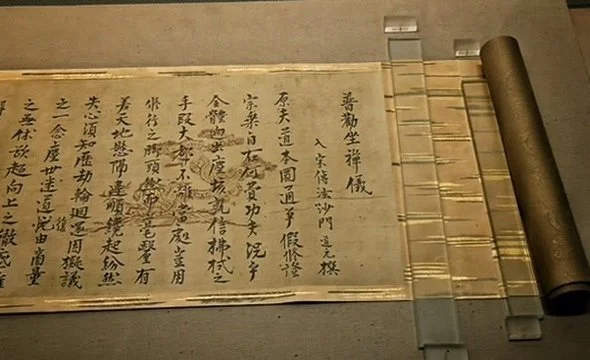
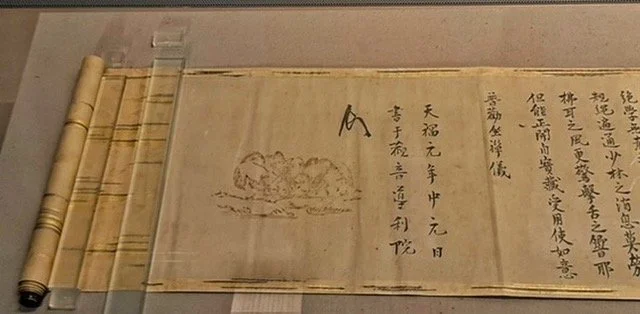
There was a Dogen museum in the visitors’ center. There were many things of interest, but one that brought me to tears was the original Fukanzazengi, written in Dogen’s hand on one long scroll. Seeing it somehow made it real in a way that learning about it and reading translations does not match. Here are images from the two ends of the scroll.
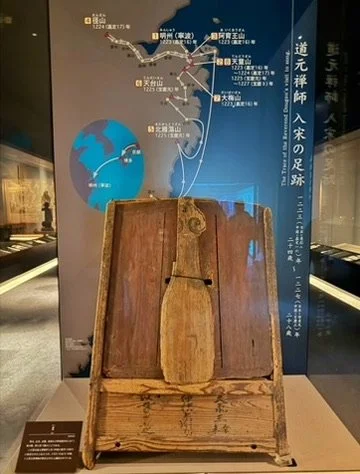
An astonishing piece in the museum was Dogen’s “backpack.” This is the original one he took on his famous, life-changing trip to China. It seems impossible that he could have carried it, but apparently it held what he needed. I wish I had taken another photo from the side so you could get a better sense of its size. It is as deep as it is wide: a very big wooden box. The picture behind the backpack shows the route Dogen took on his pilgrimage to China.
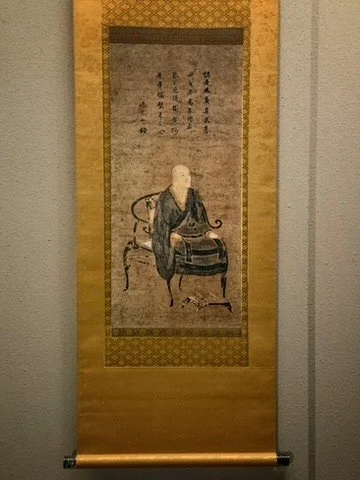
This is the oldest known portrait of Dogen, which I am sure many of you have seen reproduced. It is so amazing to see the original.
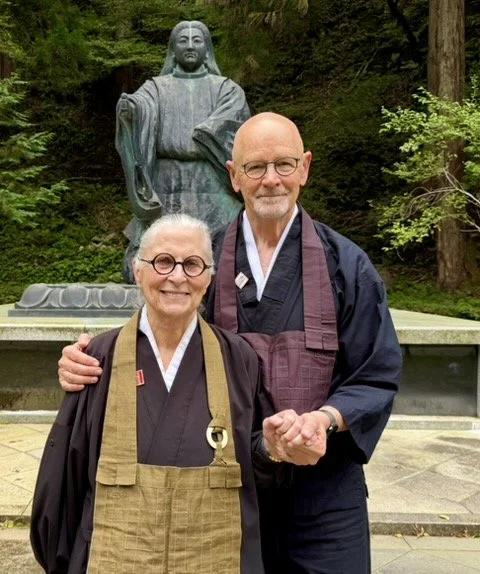
As we were leaving, we walked along the stream that flows through the beautiful gardens and cemetery. I have had the great privilege of practicing at Eihei-ji with two of the most influential women in American Zen: Blanche Hartman Roshi and Joan Halifax Roshi. Roshi Joan was invited to give a lecture to the monks the first night we were there. We were not allowed to attend, but for a woman to address this monastic assembly is a very rare thing. Here the two of us are in front of a rather odd statue of Dogen with hair. I don’t actually know the story.
And finally, Roshi Joan approached the large temple bell. Dainen helped her up the steps on the side onto the platform so she could sound the bell.
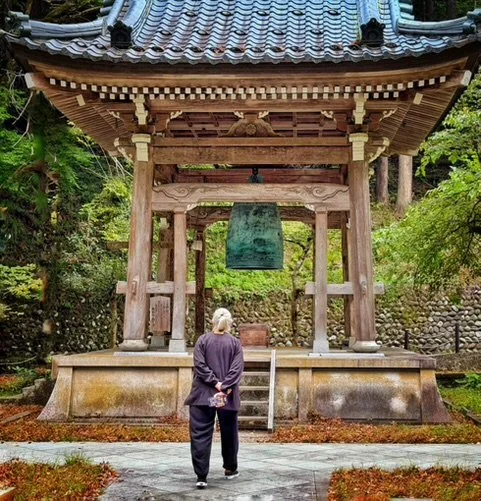
Last night, as I began working on this post, I got a call from Dainen saying everyone was waiting for me in what we call the “Enso,” essentially a check-in circle we convene every few days. I had completely forgotten and was embarrassed to be late. I had been working on a poem inspired by the bell and what it means to be on pilgrimage, especially the edges we meet along the way. Once I arrived in the room with everyone else, Roshi asked us to go around and speak to what was most alive for us and what edges we had encountered so far. This was what I had been writing about! Very strange how these things go. I didn’t share the poem because it was not finished, but here it is for you now.
Much love, as always,
Flint
The Temple Gate
A great bell waits at the entry gate.
If struck, a deep call is sent out.
A powerful sound,
something more akin to gravity,
invisibly pulling us toward the threshold,
beckoning us to enter the sacred space,
carrying our vulnerable longings
and hidden fears with us.
The bell’s echo penetrates
the deep well of silence
left by those who
have come before us.
The sound goes out further,
nudging the shadows of those
still waiting to arrive.
But if we are still enough
and silent enough,
we might hear
their whispered voices
and feel their tender presence
already abiding in our own hearts.
We are not always able
to simply turn toward the call
and step through
the open gate with ease.
Pausing, we are also unable —
or unwilling — to turn away,
to deny the call of the bell.
No, we’ve arrived at the thin place
between birth and death,
hesitating to enter
the frightening places
that could save us,
knowing we must eventually cross
the turbulent threshold
where love and loss collide,
to face what we must face,
to do what we know we have to do.
No matter, someone must eventually step
onto the platform if the bell is to speak.
Bowing, and with ordinary human effort,
the heavy log must be set in motion.
Finally striking the bell,
the sound is sent out.
What is it signaling?
The willingness to carry on,
even when we know the disturbing truth
of impermanence and uncertainty.
The faith to continue to care for each other —
and ourselves —
even when emptied and discouraged.
The ability to love the life we have,
even as everything changes suddenly
and without warning.
The temple gate remains open.
The great bell waits.
Can you hear it?