
Dear Ones,
Today was very full. We checked out of our hotel Thursday morning and took a very nice bus to Sensō-ji, Tokyo’s oldest temple. Here is part of the founding story which is quite interesting. In March, 628, Hinokuma Hamanari and his brother Takenari were fishing in the Sumida River. Bringing in their net, they were surprised to see that it held one statue . They realized they had somehow snagged a statue of Avalokitesvara Bodhisattva, also called Kannon or Kanzeon in Japan. After this, Hinokuma devoted himself to Buddhism. He made his house into a temple and devoted the rest of his life to worship and holding memorial services for this statue. In 645, a Buddhist priest named Shokai came to this region and built a hall for the Kannon. Following a revelation he received in a dream, Shokai decided to hide the statue from view. Since that time, it has remained and has never unveiled. It was thought that revealing the statue in a public way was a kind of violence against it, so it continues to be held in a sacred vault in the main temple.
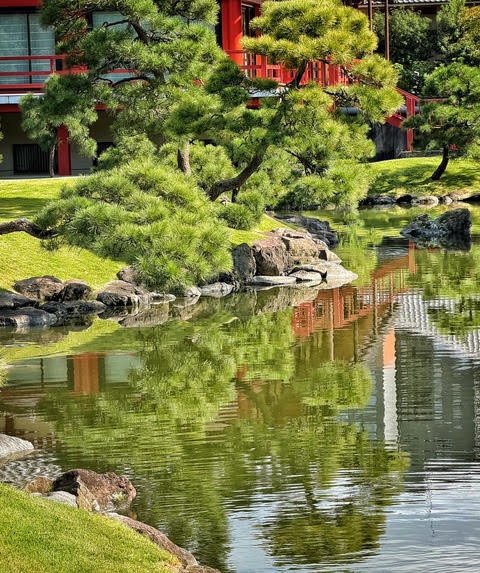
Today, we were allowed inside the temple, into places visitors do not usually go, and we were taken through some of the beautiful gardens one the ground of the temple.It was a powerful experience to all stand in front of the enormous altar, behind which was the vault holding the sacred statue, and chant the Enmei Jukku Kannon Gyo. The Buddha Hall was spectacular. We were not allowed to photograph inside the temple, but here are a few random images that ight interest you and with will give you a feel for the temple grounds. There are many images online if you want to see more.
One of the fierce protectors at the main gate.
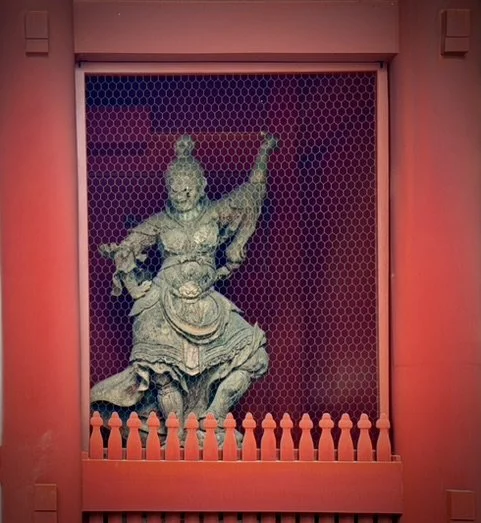
There were so many architectural and garden details that caught my eye.
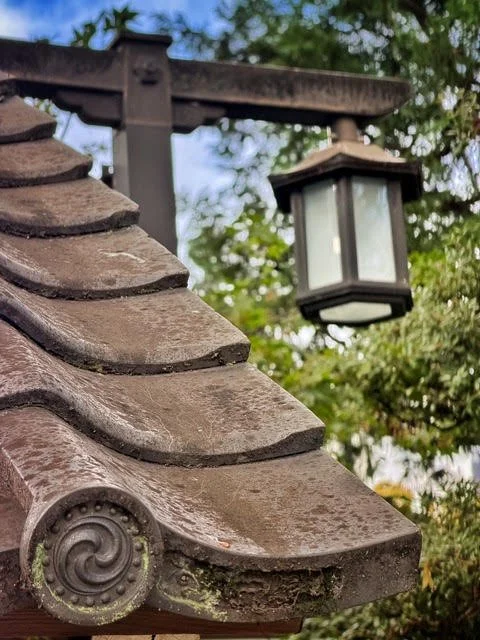
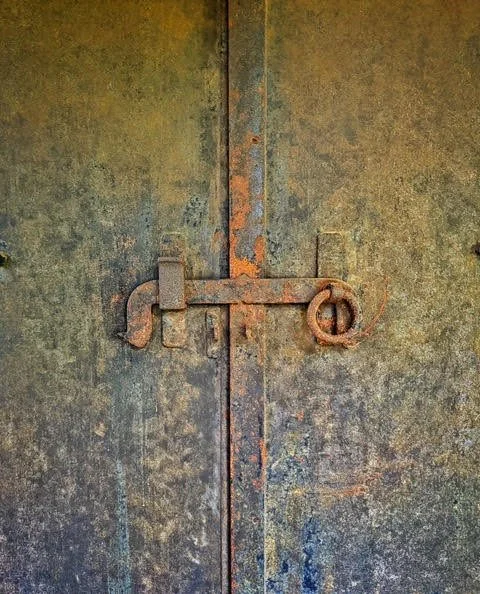
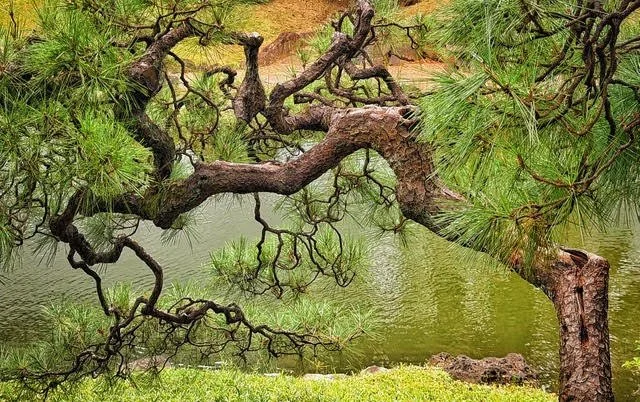
The gardens were astonishingly beautiful.
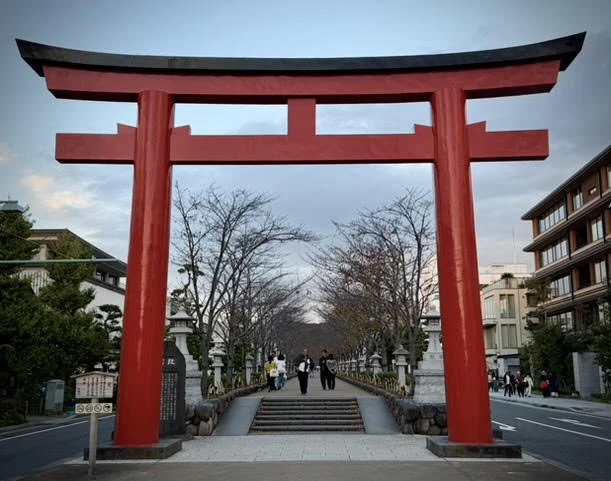
We then re-boarded the bus for a 90 minute drive to Kamakura, the place where Zen arrived in Japan. After checking into our hotel we all waked to the Tsurugaoka Hachimangū, the spiritual and physical center of Kamakura. Again, there are beautiful pictures and descriptions of the temple and shrine online. The approach is interesting, a raised path called the Dankazura, built by one of the early powerful leaders of Japan, as a prayer for his wife. It subtly narrows as it goes toward shrine, an old trick of forced perspective that makes the shrine look farther away and the walk seem longer. We were deliberately slowed down, and we made the walk at dusk, the traditional way pilgrims meet Kamakura. Here are some impressions I captured on our walk.
The entry to the Dankazura, the walkway to the shrine.
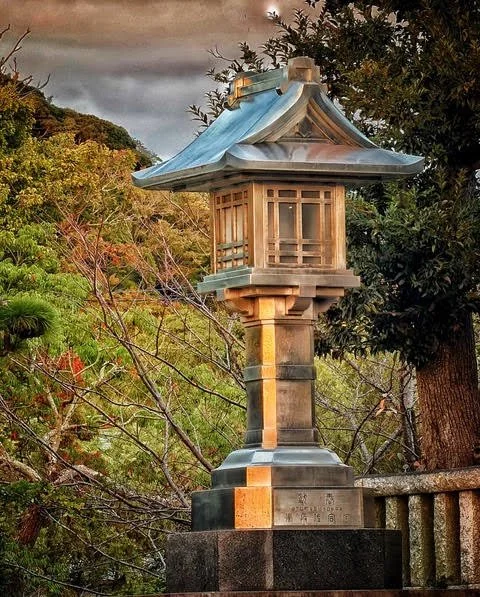
Evening sun reflected in one of the great lanterns at the entry to the shrine
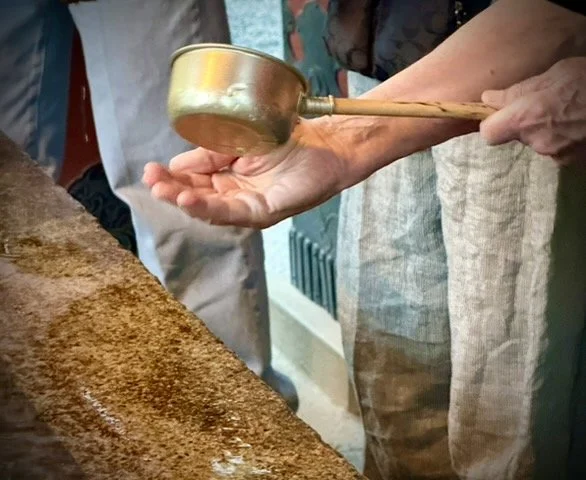
Roshi Joan leads us in the purification ritual done before entering the shrine
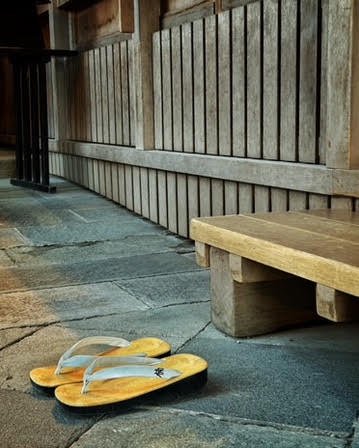
Sandals waiting for the monk to return
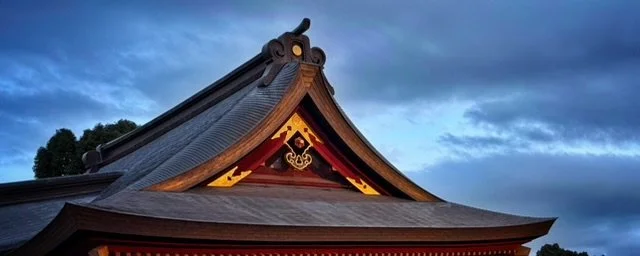
Evening architectural detail
I hope these small descriptions and reflections help you feel like you are participating in the pilgrimage. There is more to come. We meet the Great Buddha of Kamakura tomorrow, cast in the mid-thirteenth century.
With a warm bow,
Flint