
Dear Ones,
We got to sleep in! Coming out of Eihei-ji, we needed the rest.
Beginning in Tokyo last week, we visited a very contemporary expression of the dharma at teamLab and then went to the very tourist-oriented temple at Asakusa. We also did a little shopping. Then on to Kamakura, with the Great Buddha, followed by both Kenchō-ji and Engaku-ji temples, where we met several amazing teachers. Finally, we traveled to Eihei-ji. No longer visiting and touring, we stayed overnight at the monastery and followed the schedule with the monks. This is the inflection point of the journey, where we begin coming back out of the mountains and the deep practice experience we had there. Our next stop is Kanazawa.
Our group gathered at 1:00 PM to visit the D. T. Suzuki Museum, designed by Yoshio Taniguchi. The architect (Taniguchi) and the man being honored (Suzuki) were both born and raised in Kanazawa. D. T. Suzuki was born in 1870 and moved to the US in 1897 to work for a publisher, translating Chinese texts. He did more than any other person to bring Zen into the English-speaking world. He trained at Engaku-ji in Kamakura, which we visited only a few days ago. His Essays in Zen Buddhism, a series of lectures at Columbia in the 1950s, and the personal relationships he cultivated with people like John Cage, Erich Fromm, Thomas Merton, and many of the Beat writers gave him a broad reach.
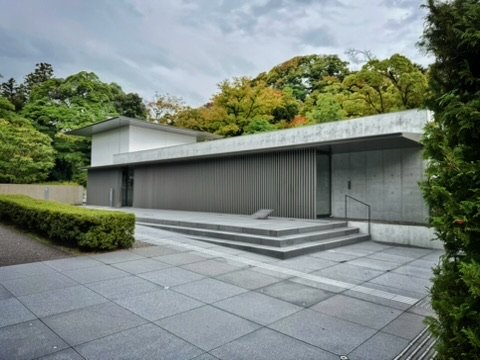
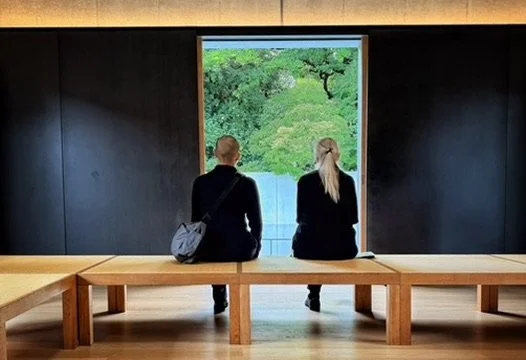
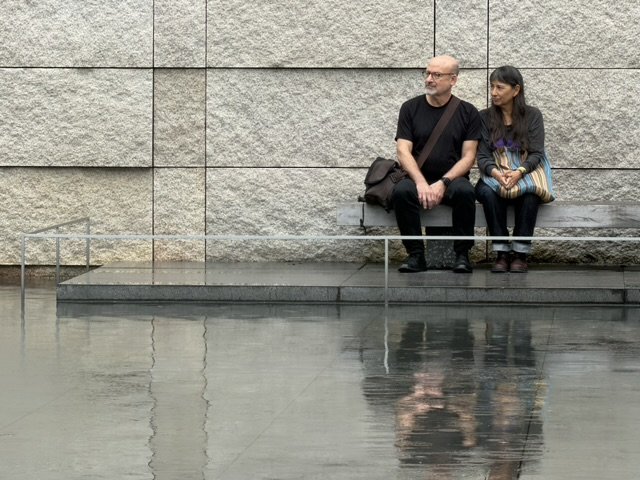
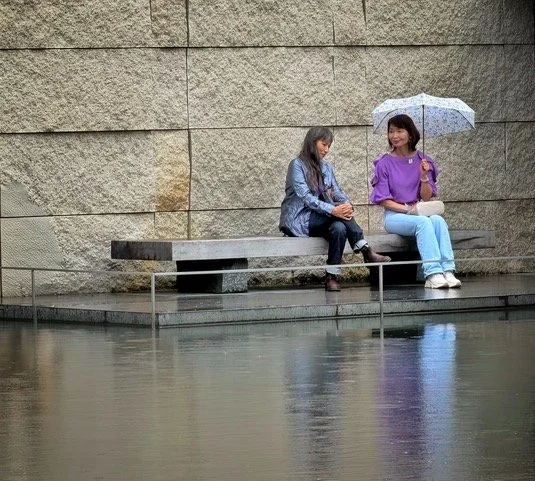
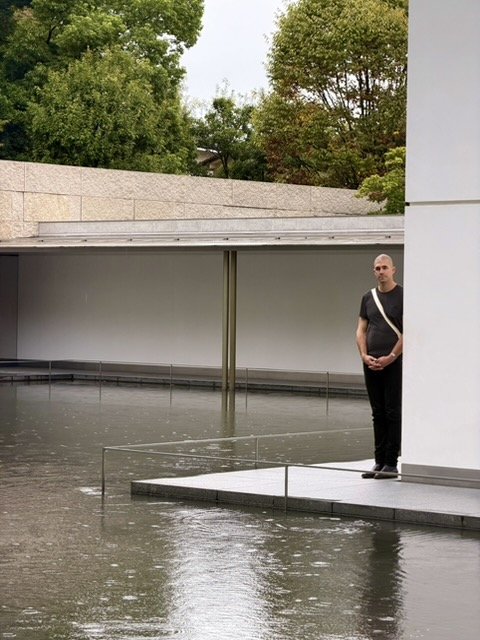
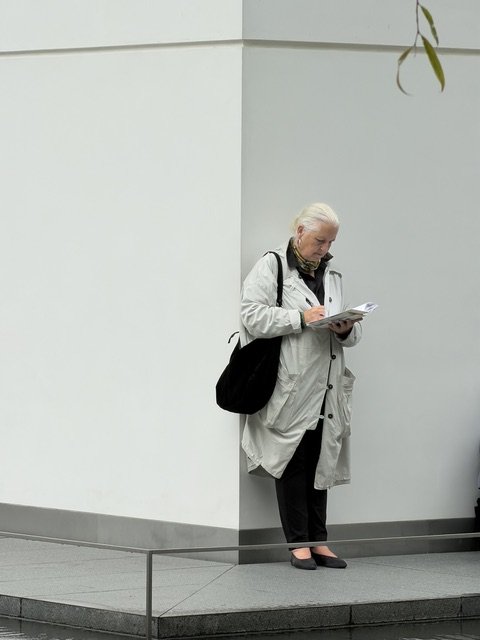
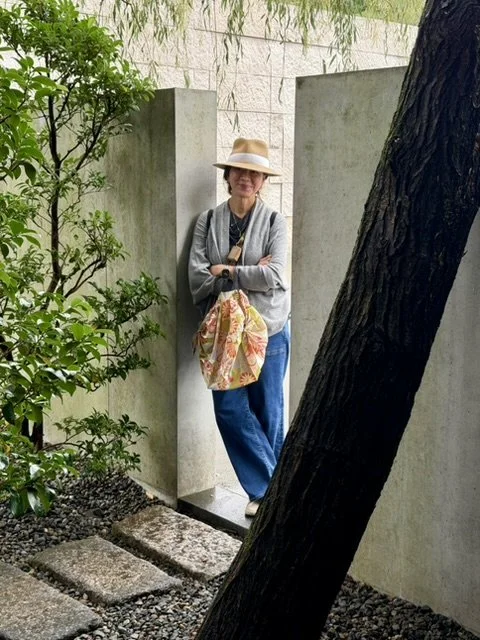
The museum, which opened in 2011, is a marvel. Taniguchi is the architect who was selected to complete a renovation of the Museum of Modern Art in New York, and he has designed many impressive buildings around the world. I said to my fellow travelers that if there had been nothing in the building, I would still have been satisfied with my visit. It is not large, but it is exquisite. Maybe some of my images will give you a small feel for the spaces. We were not allowed to take pictures inside the part of the museum where the Suzuki artifacts and archives were displayed. Here are some images featuring not only the architecture but some of my fellow pilgrims.
With love,
Flint
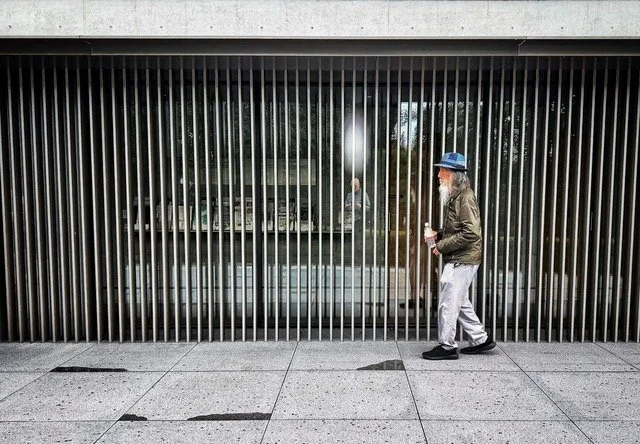
Kaz entering the museum
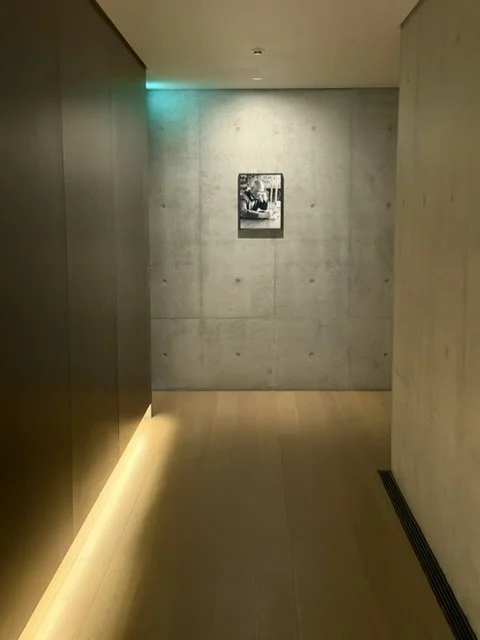
Entry hall
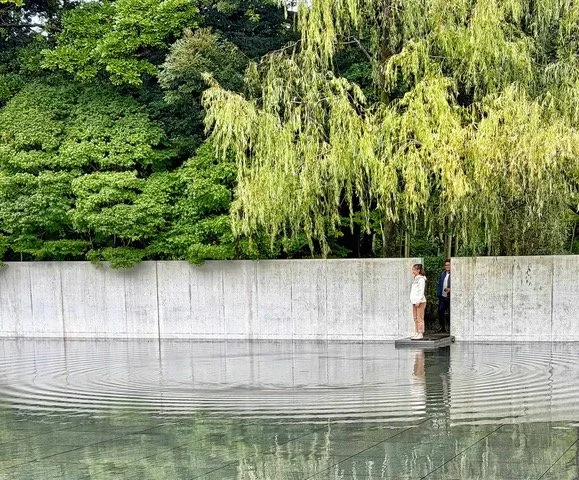
Visitors waiting across the pond
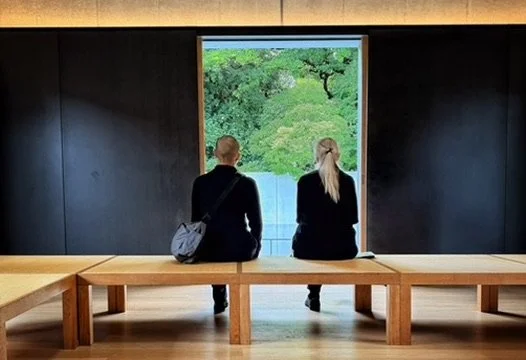
Roshi Joan and Wendy in the contemplative space
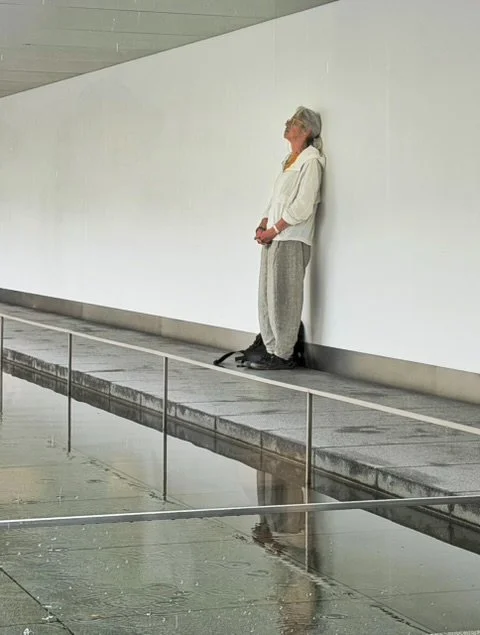
Roshi’s two phrases to describe zazen posture:
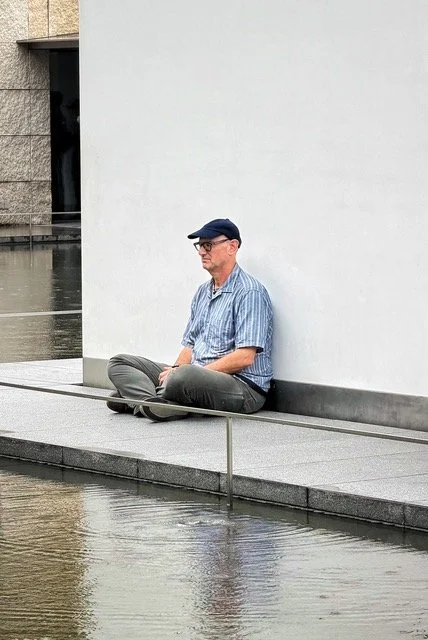
Soft front
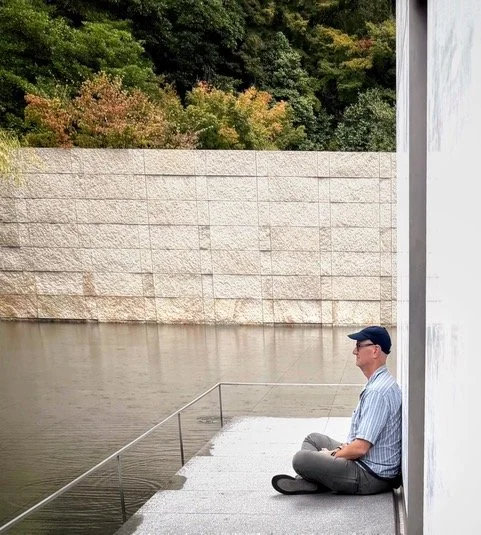
Strong back